| Summary |
This article outlines proven strategies to help law students stand out during interviews and career fairs. It focuses on preparation, professional appearance, effective communication, strategic networking, and thoughtful follow-up. By applying these techniques, law students can make strong impressions and improve their chances of securing internships and legal positions.
| Questions Answered in This Article |
- How can law students prepare effectively for interviews?
By researching employers, reviewing their resumes, practicing interview questions, and conducting mock interviews.
- What should law students wear to interviews and career fairs?
Professional, conservative attire appropriate for legal environments.
- How can law students make a strong impression at career fairs?
By preparing an elevator pitch, asking thoughtful questions, and engaging meaningfully with recruiters.
- Why is communication important during interviews and career fairs?
Clear and confident communication demonstrates professionalism, competence, and readiness for legal work.
- Should law students follow up after interviews and career fairs?
Yes. Professional follow-up emails reinforce interest and leave a positive final impression.
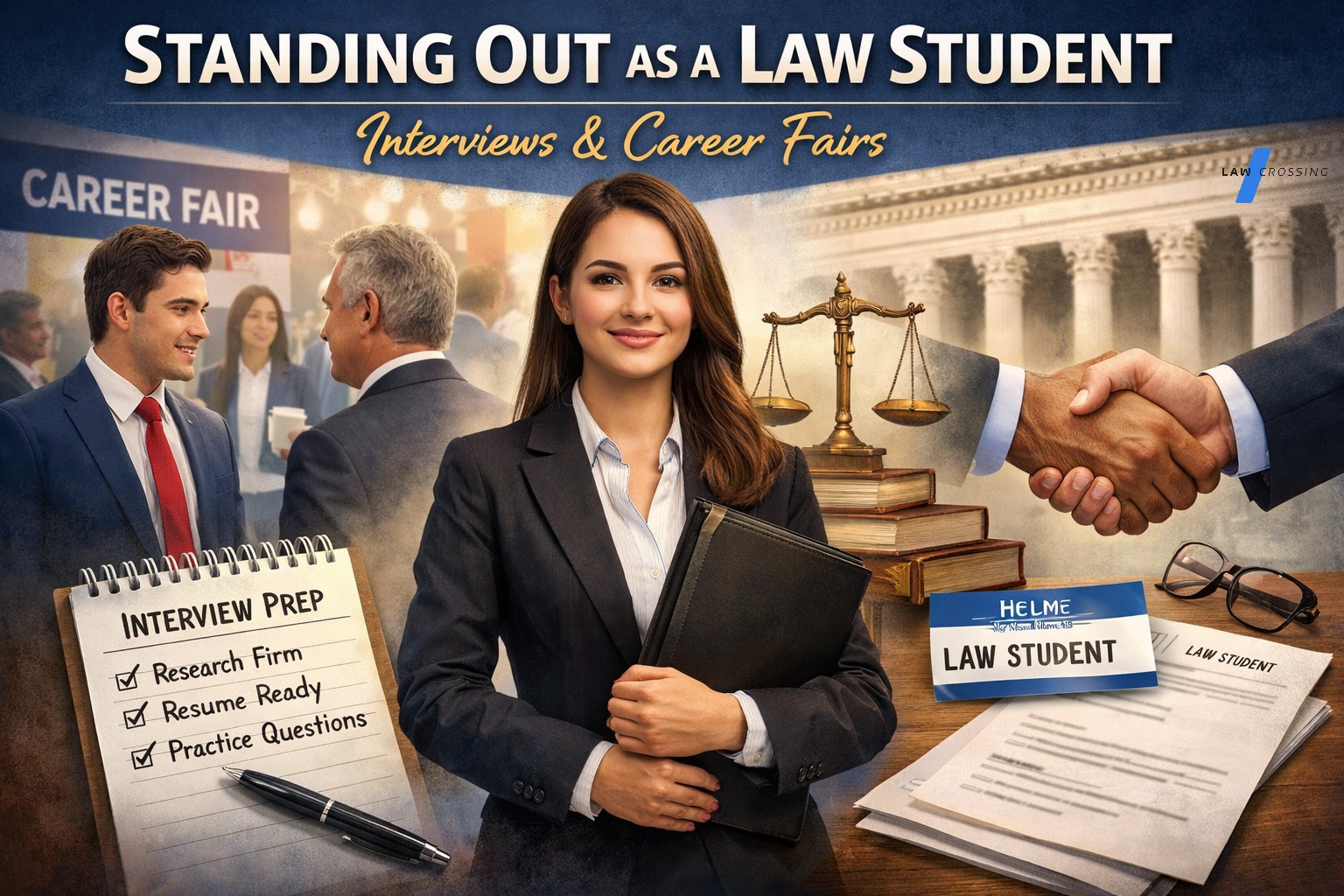
Standing out during interviews and career fairs is essential for law students seeking internships, clerkships, and entry-level legal roles. These events offer direct access to employers, but competition is intense. Law students who prepare strategically, communicate clearly, and present themselves professionally are far more likely to make a lasting impression and advance their legal careers.
See Related Articles:
1. Prepare Thoroughly Before Interviews
Preparation is the foundation of interview success. Employers expect law students to understand their organizations and to articulate their interests and qualifications confidently, which is much easier when you’re following a clear law student job search timeline that outlines what to prepare and when.
Preparation strategies include:
- Research the firm, organization, or employer in advance
- Review your resume and be ready to explain every experience
- Practice common legal interview questions
- Prepare examples that demonstrate skills such as research, writing, teamwork, and problem-solving
- Conduct mock interviews with peers, mentors, or career services
Tip: Aim for confident, conversational answers rather than memorized responses.
2. Dress and Present Yourself Professionally
First impressions matter greatly in the legal profession. Professional appearance and demeanor immediately signal seriousness and credibility.
Presentation best practices:
- Wear conservative, professional attire appropriate for legal settings
- Maintain eye contact, good posture, and a firm handshake
- Keep grooming neat and accessories minimal
- Project confidence through calm and professional body language
Tip: Choose attire that makes you feel confident and comfortable—confidence shows through presentation.
3. Stand Out at Career Fairs with Strategy
Career fairs are fast-paced, making preparation critical to meaningful engagement with recruiters.
Career fair strategies:
- Research participating employers before attending
- Prepare a concise elevator pitch introducing yourself and your interests
- Ask thoughtful questions about practice areas, firm culture, or career paths
- Take notes after conversations to personalize follow-ups
- Approach both recruiters and junior attorneys for insights
Tip: Quality conversations matter more than the number of employers you meet.
4. Communicate Clearly and Confidently
Strong communication skills help law students convey competence, professionalism, and enthusiasm, especially when applying proven legal interview success strategies that focus on clarity, structure, and confident delivery.
Effective communication tips:
- Speak clearly and avoid filler words
- Use specific examples when answering questions
- Listen actively and respond thoughtfully
- Maintain a professional yet approachable tone
- Stay composed even under pressure
5. Follow Up Professionally
Following up reinforces professionalism and keeps you memorable to employers.Follow-up steps:
- Send a personalized thank-you email within 24 hours
- Reference specific points from your conversation
- Express appreciation and continued interest
- Maintain professional connections appropriately
Tip: A concise, thoughtful follow-up can leave a strong final impression.
See Related Articles:
Conclusion
Standing out during interviews and career fairs requires preparation, professionalism, and confidence. Law students who research employers, communicate effectively, present themselves well, and follow up thoughtfully position themselves for greater success in securing legal opportunities.