| Summary |
Law students can fast-track their legal careers by leveraging the full spectrum of campus resources. From the law school career center and legal clinics to the law library, student organizations, and faculty mentorship programs, these resources help students gain practical experience, build networks, and refine professional skills. Making the most of these tools early positions students for internships, clerkships, and future job opportunities.
| Questions Answered in This Article |
- How can law students find internships through campus resources?
- What is the value of participating in a legal clinic while in law school?
- How do law students benefit from law library research resources?
- Why should law students join student organizations or law societies?
- How can mentorship on campus accelerate a law student’s career?
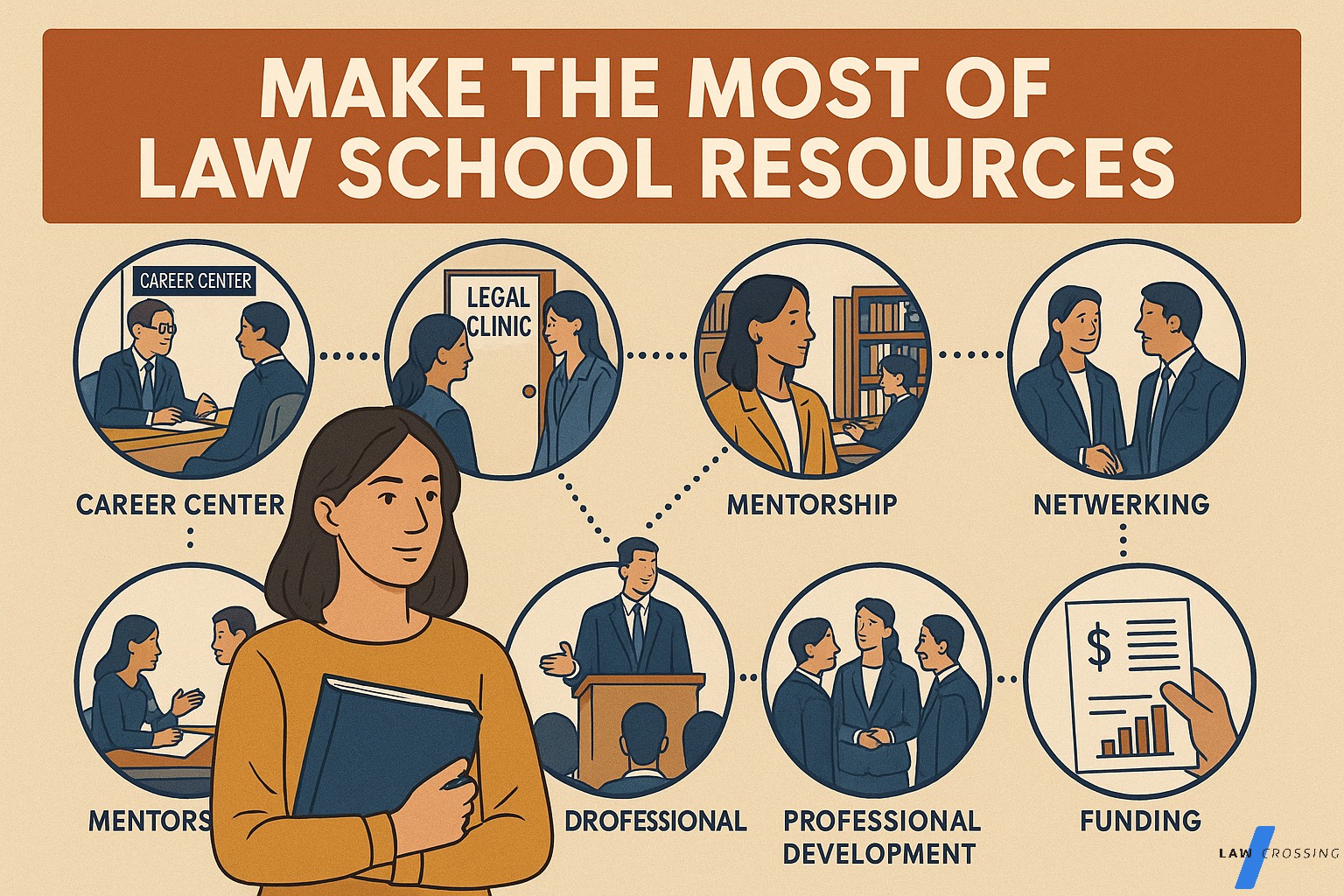
Entering law school is just the beginning. What you do on campus—beyond attending classes—can significantly influence your legal career trajectory. By strategically leveraging campus resources, law students can build experience, connections, and skills that will open doors long before graduation. Here’s how to make the most of what your law school offers.
See Related Articles:
1. Tap Into the Law School Career Center
Your law school’s career services office is one of the most powerful tools you have. It’s designed to help you find internships, clerkships, and full-time roles.
How to Use It Effectively:
- Schedule regular counseling sessions to set goals and plan your career path.
- Attend on-campus recruiting events, job fairs, and employer panels.
- Use the center’s resume and cover-letter review service tailored for legal roles.
- Request mock interviews to practice with real attorneys or alumni.
- Leverage job posting boards that are exclusive to your school.
2. Participate in Legal Clinics and Pro Bono Projects
Legal clinics offer real-world exposure and a chance to work on actual cases under the supervision of experienced attorneys. These experiences are extremely valuable to recruiters and help you develop practical skills.
Key Benefits:
- Gain hands-on experience working with clients.
- Learn how to draft pleadings, briefs, and legal memoranda.
- Develop client interviewing and counseling skills.
- Understand courtroom procedures and negotiation.
- Fulfill pro bono service hours while building your professional reputation.
Tip: Choose a clinic aligned with your interests (e.g., criminal law, family, immigration) so you can build expertise in your target practice area.
3. Leverage the Law Library & Research Resources
The law library is more than a quiet place to study — it’s a campus resource packed with tools that help you do professional-level legal research.
Where to Focus:
- Ask the reference librarians for research workshops or one-on-one support.
- Use databases like Westlaw, LexisNexis, and HeinOnline to master legal research.
- Explore specialized collections, archives, and treatises relevant to your interests.
- Attend seminars on legal writing, citation, and legal research methods.
- Join student research projects or become a research assistant to a professor.
Tip: Developing strong research skills using library resources not only helps you in law school assignments — it can also impress potential employers who value independent researchers.
4. Join Student Organizations & Law Societies
Law school isn’t just about academics. Student-led organizations help you network, lead, and engage in professional development.
- Law review or journal: improve writing, editing, and publication credentials.
- Moot court or mock trial: practice advocacy, public speaking, and legal argument.
- Specialty student groups (e.g., environmental law, corporate law, human rights): network around shared interests.
- Diversity and inclusion or affinity groups: make lasting connections and support underrepresented students.
- Professional associations: student chapters of bar associations or legal clubs.
Tip: Take on leadership roles in these organizations — leading a committee or an event shows initiative and builds leadership skills that are attractive to recruiters.
5. Seek Mentorship & Faculty Guidance
Faculty, visiting practitioners, and alumni can provide invaluable advice, mentorship, and opportunities.
Ways to Find Mentors:
- Talk to your professors during office hours about your career goals.
- Join mentoring programs run by your law school or alumni association.
- Reach out to alumni through LinkedIn for informational interviews.
- Attend speaker series, workshops, and guest lectures to meet potential mentors.
- Participate in clinical programs where attorneys or faculty supervise students.
Tip: Be proactive and intentional — ask for specific guidance (e.g., on resume feedback, internship strategies) and stay in touch regularly.
6. Utilize On-Campus Training & Professional Development Workshops
Most law schools host workshops, training sessions, and bootcamps that develop both legal and professional skills, and students can also explore ways to seize every opportunity through this BCGSearch article ‘Five Strategies Law Students Can Use to Make the Most of Every Opportunity’.
Typical Workshops Include:
- Legal writing bootcamps
- Negotiation and mediation trainings
- Practice management and legal technology seminars
- Interview and networking workshops
- Time management or stress-management sessions for law students
Tip: Attend as many of these workshops as you can. Not only do they build your skill set — but they also help you meet peers, faculty, and prospective recruiters.
7. Engage with On-Campus Career Networking Events
Networking events held by your school provide direct access to legal professionals. Use them strategically.
Ways to Leverage Events:
- Attend employer information sessions and recruitment panels.
- Participate in alumni networking nights.
- Volunteer or help organize these events to increase visibility.
- Prepare an “elevator pitch” and bring professional business cards (or digital contact info).
- Follow up after the event with personalized LinkedIn or email messages.
Tip: Show genuine interest and do your homework. Research which employers are attending, prepare thoughtful questions, and follow up meaningfully afterward.
8. Access Funding & Scholarships Through Campus Programs
Many law schools offer funding, scholarships, or grants specifically for students who take pro bono work or unpaid internships.
Possible Funding Resources:
- Public interest or pro bono stipends
- Diversity scholarships or grants
- Research grants from faculty or institutes
- Travel awards for conferences, moot court, or externships
- Academic achievement scholarships
Tip: Check with your financial aid office or career services for available funding early—so you can plan internships without financial strain.
See Related Articles:
Conclusion
Law students who actively leverage campus resources can dramatically accelerate their legal careers. By tapping into the career center, participating in clinics, mastering your law library, joining student organizations, seeking mentorship, and attending workshops, you build real-world skills, meaningful relationships, and professional visibility. Start early, stay engaged, and use every resource available to set yourself up for success both during law school and beyond.

