| Ready to see how your compensation stacks up and where BigLaw salaries are headed next? Dive into our in-depth report: BigLaw Associate Salaries 2000–2026: Bonus Trends, Regional Variations, and 2026 Forecast. |
Compensation for associates at large U.S. law firms (“BigLaw”) has transformed dramatically over the past two decades. From base salaries to complex bonus structures, regional pay variations to evolving performance incentives, these shifts tell a story of competition, profitability, and strategic adaptation. This article explores how BigLaw associate pay has changed from 2000 to 2026—highlighting key salary milestones, bonus trends, and forecasts for the future.
1. Two-Decade Growth in Base Salaries
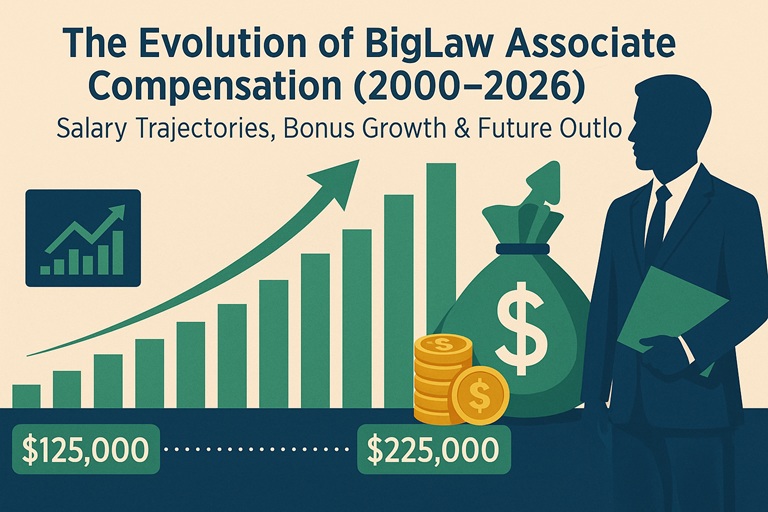
In 2000, first-year associates at top law firms earned around $125,000—a significant sum at the time. By contrast, today’s first-year associates at leading national firms earn $225,000 or more, with senior associates approaching $435,000+. The consistent increase reflects heightened competition for talent, rising client demands, and sustained firm profitability.
The so-called Cravath scale continues to influence market standards, serving as the benchmark for elite firms nationwide. Despite economic slowdowns, compensation growth has remained strong, fueled by high billing rates and pressure to attract and retain top talent.
2. Bonus Structures: From Standard to Strategic
- Year-end bonuses typically range from $15,000 for first-years to over $115,000 for senior associates, depending on class year.
- Special bonuses reward exceptional performance, client wins, or firm profitability.
- Many firms now link bonuses to billable hours and hybrid-work compliance, reinforcing accountability and engagement.
This shift marks a clear move from entitlement-based bonuses to merit-driven rewards, aligning associate performance with firm growth and profitability.
3. Regional Variations and Firm Tiers
While the major New York and national firms adhere to the Cravath scale, compensation disparities remain across regions and firm sizes.
- Top-tier firms in major markets such as New York, San Francisco, and Washington, D.C. maintain the highest scales.
- Boutique and mid-sized firms often pay less but offset it with improved work-life balance or hybrid flexibility—though some have recently matched BigLaw scales to attract top talent.
- Practice-area specialization also drives compensation differences—attorneys in corporate, M&A, and intellectual property law typically earn more than those in general litigation or public interest fields.
These variations reflect differing market economics, cost-of-living factors, and practice-area profitability.
4. Recent Compensation Trends: 2024–2025
- Maintaining lockstep base increases while enhancing senior-level pay.
- Tying bonuses more closely to billable metrics and firm engagement.
- Experimenting with discretionary “extra” bonuses to reward high-performing associates.
First-year base salaries are expected to continue rising, potentially reaching $250,000 within the next few years.
5. The 2026 Forecast
Based on historical trends and current market pressures, the forecast for 2026 includes:
- First-year salaries potentially reaching or surpassing $250,000.
- Performance modifiers becoming standard for bonus eligibility.
- Regional pay gaps widening, as top firms pull further ahead of smaller markets.
- More personalized compensation models, including spot bonuses and retention incentives.
Associates who demonstrate strong business generation, client service, and adaptability to firm culture will likely see the greatest financial rewards.
6. Strategic Implications for Associates, Firms, and Recruiters
For Associates:
- Understand your market value—research compensation benchmarks by class year and geography.
- Focus on in-demand practice areas to increase your earning potential.
- Prioritize performance metrics and client development to secure top bonuses.
For Law Firms:
- Competitive pay is critical to retaining high performers.
- Transparent performance criteria help align incentives and reduce turnover.
- Balancing compensation growth with profitability remains a key challenge.
For Recruiters:
- Salary data plays an essential role in advising candidates and firms.
- Recruiters must stay current on compensation trends to negotiate effectively.
- Lateral candidates expect clarity and market alignment from day one.
Conclusion
From 2000 to 2026, BigLaw associate compensation has steadily climbed, reflecting both the escalating demands of legal work and the industry’s intense competition for talent. With salaries nearing a quarter-million dollars for entry-level associates and performance bonuses reaching record highs, the landscape continues to evolve. The next few years will test how firms balance compensation growth with culture, productivity, and long-term sustainability—making data-driven career planning more essential than ever for both attorneys and employers.
| Ready to see how your compensation stacks up and where BigLaw salaries are headed next? Dive into our in-depth report: BigLaw Associate Salaries 2000–2026: Bonus Trends, Regional Variations, and 2026 Forecast. |

