| Summary |
This article explores the importance of career resilience for law students, offering practical strategies to navigate setbacks, leverage support networks, develop adaptive skills, and sustain motivation for professional growth.
| Questions Answered in This Article |
- What is career resilience for law students?
Career resilience is the ability to recover, adapt, and thrive despite setbacks in law school and early career challenges.
- How can law students handle academic or internship setbacks?
By acknowledging challenges, analyzing controllable factors, and maintaining perspective, students can turn setbacks into learning opportunities.
- What strategies help build resilience in law school?
Strategies include problem-solving, flexibility, stress management, leveraging mentors and peer support, continuous learning, and maintaining motivation.
- Why is career resilience important for future lawyers?
Resilience demonstrates adaptability, problem-solving, and maturity, all of which are highly valued by employers in the legal field.
- How can students stay motivated despite obstacles?
Setting realistic goals, celebrating small wins, visualizing success, and focusing on long-term ambitions helps maintain motivation through challenges.
See Related Articles:
Understanding Career Resilience
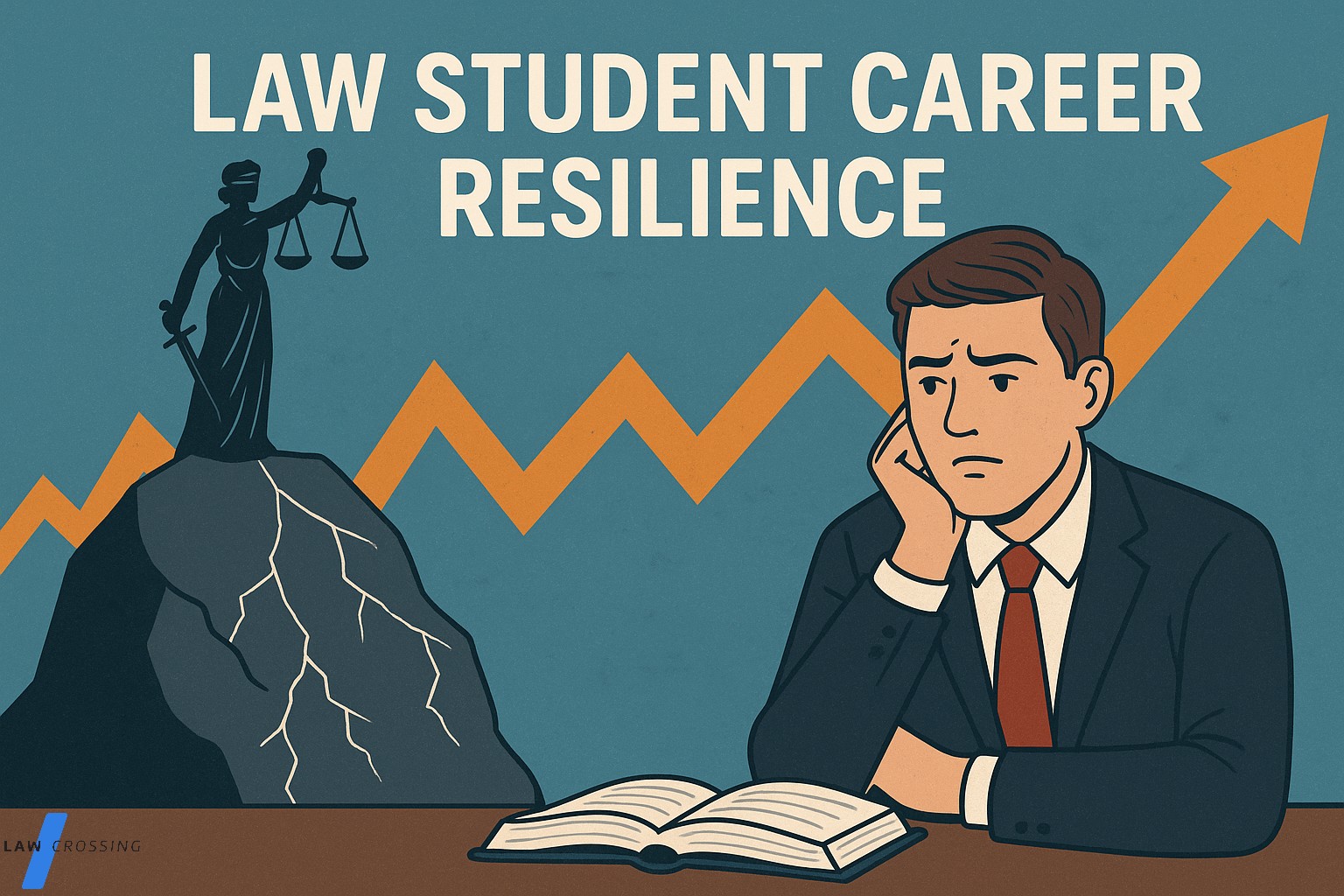
Career resilience is a crucial skill for law students navigating the demanding landscape of legal education and the competitive job market. It goes beyond simply “bouncing back” from setbacks—it involves proactive strategies to adapt, learn, and grow from challenges while maintaining focus on long-term career goals. Developing career resilience equips law students to face obstacles with confidence, maintain professional momentum, and ultimately thrive in the legal profession.
1. Defining Career Resilience
- Adaptability: The ability to adjust to unexpected changes, such as exam results, internship rejections, or shifting career plans.
- Persistence: Maintaining effort and commitment toward goals even when progress is slow or setbacks occur.
- Self-awareness: Recognizing personal strengths, weaknesses, and emotional responses to challenges.
2. Recognizing the Importance of Career Resilience
- Managing stress: Law school and early legal careers are high-pressure environments; resilience helps maintain mental health and prevent burnout.
- Enhancing employability: Employers value candidates who can overcome challenges, remain professional, and contribute positively under pressure. Developing such professionalism early can be supported by strategic preparation—see “Law Student Job Search Timeline: What to Do (and When to Do It)”, which outlines how law students can plan internships and job applications to build employability even after setbacks.
- Supporting long-term growth: Resilient students are more likely to pursue continuous learning, seek mentorship, and adapt to evolving legal landscapes.
3. Components of a Resilient Mindset
- Optimism: Viewing setbacks as temporary and as opportunities to learn rather than permanent failures.
- Problem-solving orientation: Approaching challenges analytically and strategically to identify solutions.
- Emotional regulation: Maintaining composure and perspective when faced with disappointment or stress.
- Goal clarity: Keeping focus on long-term objectives while adjusting short-term plans as needed. To strengthen this mindset, explore “Setting Strategic Goals for Legal Excellence: A SMART Approach for Attorneys and Law Students”, which offers actionable steps for defining measurable legal career goals that foster sustained motivation and resilience.
- Improved academic performance: Resilience encourages persistence and proactive learning strategies.
- Enhanced networking: Resilient students engage confidently with mentors, peers, and professionals.
- Greater career adaptability: Ability to pivot to alternative legal careers or opportunities when traditional paths are not feasible.
By understanding and cultivating career resilience, law students can transform challenges into growth opportunities, maintain motivation during difficult periods, and lay the foundation for a successful and fulfilling legal career.
Benefits of Building Career Resilience
Building career resilience offers law students a strategic advantage in navigating the rigorous demands of law school and the competitive legal job market. Resilient students are better equipped to manage challenges, maintain focus, and achieve long-term professional success. Understanding the benefits of resilience can motivate students to develop habits and strategies that strengthen their career trajectory.
1. Enhanced Adaptability and Problem-Solving
- Navigating setbacks: Resilient students can adjust to academic disappointments, internship rejections, or shifting career plans without losing momentum.
- Creative solutions: They approach challenges analytically, finding innovative ways to overcome obstacles.
- Future-proofing careers: Adaptability ensures students can pivot to new opportunities in emerging legal fields or alternative careers.
2. Increased Confidence and Self-Efficacy
- Belief in abilities: Overcoming setbacks reinforces a student’s confidence in their skills and judgment.
- Positive mindset: Confidence supports proactive networking, skill development, and professional decision-making.
- Persistence in goals: Resilient students remain focused on long-term objectives despite short-term challenges.
3. Better Stress Management and Mental Health
- Emotional regulation: Resilience helps students maintain composure under pressure, reducing anxiety and burnout.
- Healthy coping strategies: Students develop tools like mindfulness, time management, and exercise to manage stress effectively.
- Sustainable performance: Maintaining mental health allows consistent effort and productivity over time.
4. Stronger Professional Reputation
- Reliability and maturity: Employers value candidates who demonstrate perseverance and professionalism.
- Networking opportunities: Confidence and resilience make students more engaging and approachable in professional interactions.
- Long-term credibility: A resilient mindset signals to mentors and employers that the student can handle challenges in the workplace.
5. Increased Career Satisfaction and Growth
- Learning from challenges: Setbacks become opportunities for skill development and personal growth.
- Alignment with goals: Resilient students can explore alternative paths when traditional ones are blocked, maintaining fulfillment and motivation.
- Leadership potential: Overcoming adversity prepares students to mentor others, take initiative, and lead in professional settings.
By cultivating career resilience, law students gain adaptability, confidence, mental strength, a strong professional reputation, and long-term career satisfaction—essential traits for thriving in both law school and the broader legal profession.
See Related Articles:
Conclusion
Setbacks are inevitable in law school, but they do not define your career trajectory. By cultivating career resilience through self-awareness, adaptability, support networks, continuous learning, and motivation, law students can turn challenges into opportunities for growth. Thriving despite obstacles ensures long-term success, personal development, and a fulfilling legal career.