| Summary |
This article explores how attorneys can balance strong legal advocacy with effective business development. It highlights practical strategies including client relationship management, thought leadership, leveraging technology, and collaborative approaches, ensuring both professional excellence and career growth.
| Questions Answered in This Article |
- Why is balancing advocacy and business development important for attorneys?
Because it ensures long-term career growth, client loyalty, and sustainable practice success.
- How can attorneys maintain strong client relationships while focusing on advocacy?
By keeping clients informed, understanding their goals, anticipating needs, and providing proactive advice.
- What role does technology play in balancing these responsibilities?
Technology streamlines client communication, tracks opportunities, and provides analytics to identify high-potential clients.
- How can attorneys integrate thought leadership into business development?
Through publishing articles, hosting webinars, speaking at events, and sharing insights on professional networks.
- What are the long-term benefits of balancing advocacy with business development?
Benefits include stronger client loyalty, enhanced reputation, career advancement, and financial stability.
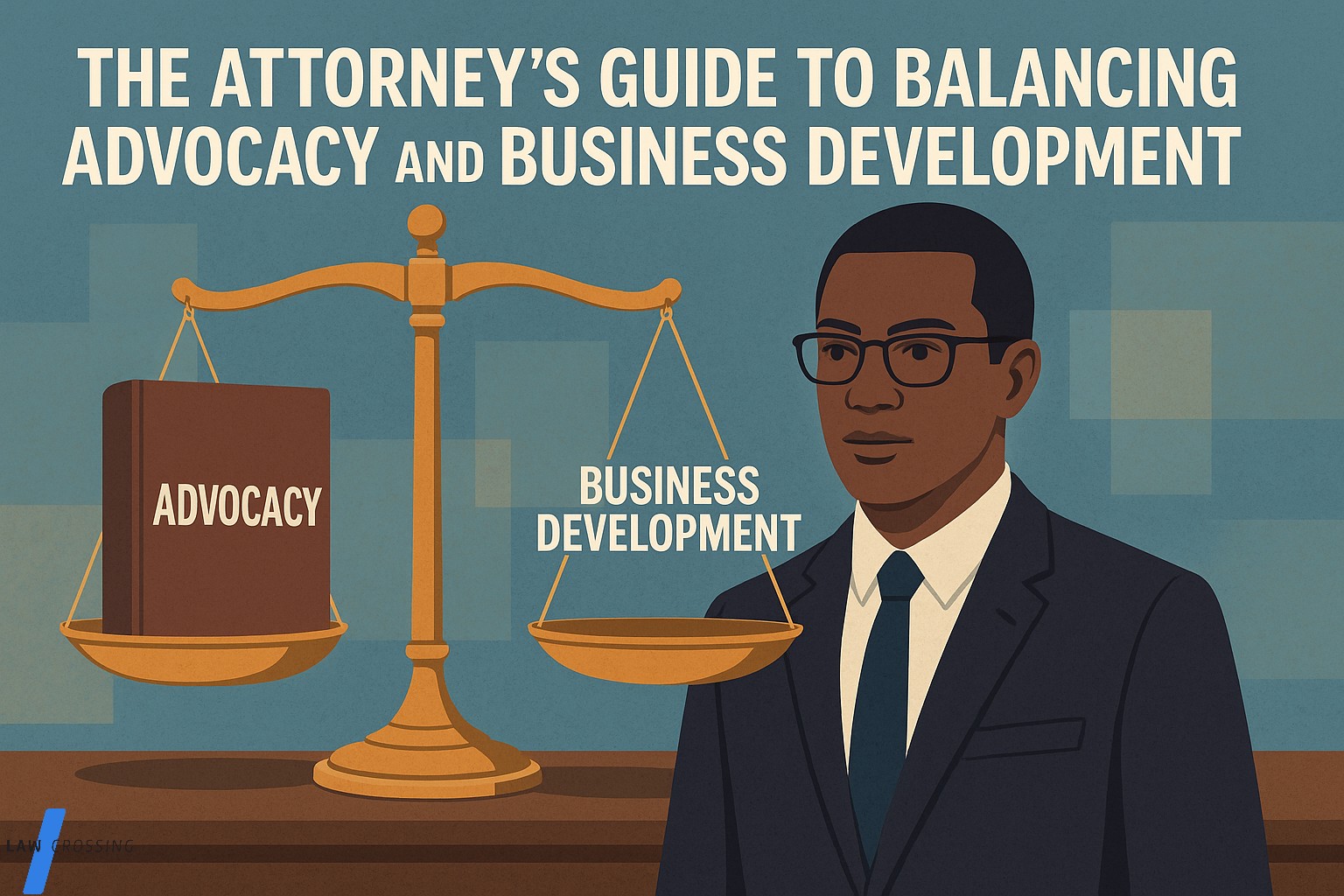
For attorneys, excelling in legal advocacy is just one side of the career equation. Equally important is the ability to generate business and cultivate client relationships that sustain long-term success. In today’s competitive legal market, attorneys who can seamlessly combine strong advocacy skills with effective business development strategies — a point emphasized in “Navigating Law Firm Business Development: A Comprehensive Guide” — position themselves for greater career growth, client loyalty, and firm profitability.
See Related Articles:
Why Balancing Advocacy and Business Development Matters
Attorneys often excel in legal advocacy but struggle to dedicate sufficient time and resources to business development. Conversely, focusing too heavily on client acquisition can compromise the quality of legal representation. Balancing these two critical responsibilities ensures that attorneys not only deliver exceptional legal outcomes but also secure the long-term growth and stability of their practice.
1. Sustained Revenue and Business Growth
Balancing advocacy with business development ensures a consistent stream of clients and revenue.
- Retain existing clients by demonstrating both competence and commitment
- Generate new business through referrals and client satisfaction
- Protect against revenue fluctuations caused by cyclical or one-off cases
2. Long-Term Career Stability
Attorneys who focus solely on advocacy may face limitations in career progression if they are not actively building a client base. A balanced approach offers:
- Greater chances of promotion or partnership within law firms
- Expanded professional network and industry visibility
- Opportunities to diversify practice areas and services
3. Enhanced Professional Reputation
Excellence in advocacy builds credibility, but combining it with business development enhances professional influence.
- Recognized as both a skilled attorney and a trusted advisor
- Builds a reputation for reliability and client-focused service
- Positions attorneys as leaders in their practice area
4. Meeting Modern Client Expectations
Clients in 2025 expect attorneys to provide both exceptional legal representation and proactive relationship management.
- Anticipating client needs demonstrates both advocacy and advisory skills
- Active engagement fosters trust and client loyalty
- Balanced attorneys are better equipped to offer strategic solutions
Table: Benefits of Balancing Advocacy and Business Development
| Focus Area | If Overemphasized Alone | Benefits of Balance |
|---|---|---|
| Advocacy Only | High-quality legal work but limited new clients | Maintains excellence while securing repeat and referral business |
| Business Development Only | Increased clients but potential drop in service quality | Sustained client satisfaction and long-term firm growth |
| Balanced Approach | N/A | Strong legal representation + continuous business growth + enhanced reputation |
Attorneys who balance advocacy with business development position themselves for long-term success, combining client satisfaction, revenue growth, professional recognition, and career stability.
Understanding the Dual Roles of Attorneys
1. The Advocate Role
The advocate role focuses on delivering high-quality legal representation and achieving successful outcomes for clients. Key responsibilities include:
- Legal Expertise: Applying knowledge of laws, regulations, and case precedent effectively
- Client Representation: Representing client interests in negotiations, hearings, or litigation
- Ethical Practice: Maintaining professional ethics, confidentiality, and integrity
- Strategic Advice: Offering sound legal guidance and anticipating potential challenges
- Problem-Solving: Creating solutions tailored to each client’s unique circumstances
2. The Business Developer Role
The business developer role focuses on generating new opportunities and maintaining relationships that support the growth of the attorney’s practice. Key responsibilities include:
- Client Relationship Management: Building long-term trust and rapport with clients
- Networking: Connecting with industry professionals, potential clients, and referral sources
- Marketing and Branding: Establishing thought leadership through publications, presentations, or social media
- Opportunity Identification: Recognizing emerging legal needs and new market opportunities
- Revenue Growth: Securing high-value clients and repeat business for sustainable financial success
3. Balancing Both Roles
Successfully integrating advocacy and business development requires intentional effort. Attorneys should:
- Allocate time for both client representation and relationship-building
- Leverage technology to streamline administrative tasks and free time for strategic work
- Collaborate with colleagues to cross-refer clients and expand service offerings
- Track performance in both legal outcomes and business development metrics
Table: Comparison of Advocate vs. Business Developer Responsibilities
| Role | Primary Focus | Key Activities |
|---|---|---|
| Advocate | Client representation and legal success | Court representation, legal research, strategy planning |
| Business Developer | Growth, client acquisition, and retention | Networking, marketing, relationship management, referrals |
| Balanced Attorney | Both legal excellence and business growth | High-quality legal outcomes + proactive client engagement |
Attorneys who understand and effectively balance their dual roles as advocate and business developer are better positioned to achieve career growth, client loyalty, and long-term practice sustainability.
Strategies for Integrating Advocacy and Business Development
Successfully balancing advocacy and business development requires attorneys to adopt strategies that allow both roles to complement each other. When integrated effectively, advocacy efforts can support business development, and client-focused business development can enhance legal outcomes.
1. Prioritize Client Relationships
Strong client relationships are the foundation for both advocacy and business development.
- Maintain regular communication through emails, calls, or virtual meetings
- Understand clients’ long-term goals and challenges
- Offer proactive legal advice and anticipate client needs
- Seek client feedback to improve services and build trust
2. Leverage Thought Leadership
Establishing yourself as an expert builds credibility, attracting clients while reinforcing advocacy skills — much like the networking and visibility techniques outlined in “Top 9 Ways For Any Attorney To Generate a Huge Book of Business”.
- Write articles, blogs, or white papers on relevant legal topics
- Present at conferences, webinars, or industry events
- Share insights on professional networks and social media
- Offer free or low-cost workshops to demonstrate expertise
3. Use Technology to Your Advantage
Technology can streamline both client service and business development efforts.
- Implement a CRM system to track client interactions and business opportunities
- Use secure digital platforms for sharing documents and updates
- Leverage analytics to identify high-potential clients or market trends
- Automate routine tasks to focus on high-value advocacy and networking
4. Time Management and Delegation
Balancing dual responsibilities requires careful allocation of time.
- Dedicate specific hours to business development and networking activities
- Delegate administrative tasks to paralegals or support staff
- Prioritize high-impact activities that serve both advocacy and growth goals
- Use scheduling tools to ensure consistent client engagement without compromising legal work
5. Collaborate Within the Firm
Partnering with colleagues can create opportunities for integrated advocacy and business development.
- Cross-refer clients across practice areas to provide comprehensive services
- Co-develop proposals or pitches for complex client needs
- Share best practices and insights for client engagement
- Build internal networks to leverage firm-wide expertise
Table: Integrating Advocacy and Business Development
| Strategy | Advocacy Benefit | Business Development Benefit |
|---|---|---|
| Prioritize Client Relationships | Builds trust and stronger legal representation | Encourages repeat business and referrals |
| Leverage Thought Leadership | Enhances credibility and authority | Attracts new clients and strengthens brand |
| Use Technology | Streamlines case management and communication | Identifies opportunities and improves client engagement |
| Time Management & Delegation | Ensures focus on high-value legal work | Allocates dedicated time for networking and growth |
| Collaborate Within the Firm | Provides comprehensive solutions for clients | Expands service offerings and firm visibility |
By intentionally integrating advocacy with business development, attorneys can deliver exceptional legal outcomes while simultaneously growing their client base, reputation, and long-term career opportunities.
Overcoming Common Challenges
1. Time Constraints and Heavy Caseloads
Managing client demands, court deadlines, and business development activities can feel overwhelming.
Solutions:
- Use a structured schedule to allocate time for both advocacy and networking
- Prioritize high-impact tasks that serve both legal outcomes and business growth
- Delegate administrative or repetitive tasks to support staff
- Set boundaries to prevent burnout
2. Ethical Concerns About Marketing
Many attorneys worry about self-promotion conflicting with professional ethics.
Solutions:
- Focus on educational marketing such as thought leadership articles or webinars
- Build credibility through client success stories without exaggeration
- Maintain transparency in all business development communications
- Follow state bar guidelines for attorney advertising
3. Difficulty Measuring ROI of Business Development
It can be challenging to quantify the impact of networking, marketing, or client outreach.
Solutions:
- Track client acquisition sources (referrals, events, online engagement) and consider developing a personal plan as suggested in “Seven Sample Attorney Business Plans: Why Attorneys Must Have Business Plans” to align advocacy goals with business development targets
- Measure retention rates and repeat business
- Monitor engagement metrics for content or events (e.g., webinar attendance, blog readership)
- Review conversion rates of leads to paying clients
4. Risk of Overextending
Focusing on business development can sometimes compromise advocacy quality or personal well-being.
Solutions:
- Set realistic goals for client growth and networking
- Balance workload by scheduling advocacy and business development activities strategically
- Practice self-care and time off to maintain high performance
- Use technology to automate routine tasks and free up time
5. Integrating Firm-Wide Collaboration
Coordinating with colleagues across practice areas can be difficult but is critical for comprehensive client service.
Solutions:
- Establish clear communication channels for cross-practice collaboration
- Hold regular internal meetings to share client insights and opportunities
- Create referral protocols to ensure smooth client handoffs
- Encourage knowledge sharing to strengthen both advocacy and business development efforts
Table: Common Challenges and Solutions
| Challenge | Impact if Unaddressed | Solutions |
|---|---|---|
| Time Constraints & Heavy Caseloads | Burnout, missed opportunities | Scheduling, delegation, task prioritization |
| Ethical Concerns About Marketing | Hesitation in outreach, lost clients | Educational marketing, transparency, bar compliance |
| Measuring ROI of Business Development | Difficulty justifying effort | Track acquisition, retention, engagement metrics |
| Risk of Overextending | Decline in advocacy quality and well-being | Goal setting, balanced scheduling, self-care |
| Integrating Firm Collaboration | Missed cross-referral opportunities | Clear communication, regular meetings, knowledge sharing |
Attorneys can overcome the common challenges of balancing advocacy and business development by strategically managing time, adhering to ethical guidelines, leveraging metrics, collaborating effectively, and prioritizing self-care, ensuring sustainable career growth and client satisfaction.
The Long-Term Benefits
Successfully balancing advocacy and business development delivers benefits that extend well beyond immediate client outcomes or revenue gains. Attorneys who integrate these two aspects of practice enjoy enhanced career growth, client loyalty, and professional reputation, which collectively contribute to long-term success and stability.
1. Stronger Client Loyalty and Referrals
Clients value attorneys who deliver exceptional legal results while also building personal relationships.
- Increased repeat business from satisfied clients
- Higher likelihood of referrals to other clients or industry contacts
- Development of long-term, trusted partnerships
2. Career Advancement Opportunities
Attorneys who excel in both advocacy and business development often achieve faster career progression.
- Greater chances of promotion or partnership in law firms
- Opportunities to lead client-facing initiatives or practice areas
- Recognition as both a skilled attorney and a trusted advisor
3. Financial Stability and Revenue Growth
Balancing legal excellence with business development supports sustained financial success.
- Diversified client base reduces dependence on single sources of revenue
- High-value clients and repeat engagements increase overall revenue
- Ability to expand services into niche or emerging practice areas
4. Enhanced Professional Reputation
Excellence in advocacy combined with proactive business development strengthens an attorney’s brand.
- Seen as a well-rounded professional who delivers results and builds relationships
- Greater visibility within the legal community and among potential clients
- Opportunities for thought leadership and speaking engagements
5. Personal Fulfillment and Work-Life Integration
Balancing professional responsibilities with strategic growth can improve overall career satisfaction.
- Greater sense of achievement by excelling in multiple dimensions of practice
- Confidence in long-term career trajectory
- Improved work-life balance through effective time management and delegation
Table: Long-Term Benefits of Balancing Advocacy and Business Development
| Benefit Area | Impact on Attorneys | Impact on Clients |
|---|---|---|
| Client Loyalty & Referrals | Repeat business, referral network expansion | Consistent high-quality service, trusted relationship |
| Career Advancement | Promotion, partnership, leadership opportunities | Clients benefit from experienced, recognized attorneys |
| Financial Stability & Revenue | Sustainable income, diversified revenue sources | Clients receive reliable, ongoing legal support |
| Professional Reputation | Enhanced credibility and visibility | Increased confidence in attorney expertise |
| Personal Fulfillment & Balance | Greater satisfaction and work-life integration | Clients feel valued and supported |
Attorneys who effectively balance advocacy and business development enjoy long-term advantages that include client loyalty, career growth, financial stability, professional recognition, and personal fulfillment—benefits that compound over time and position them for sustained success.
See Related Articles:
Conclusion
For attorneys in 2025, success is defined not only by courtroom wins but also by the ability to develop and maintain strong business relationships. By prioritizing client engagement, leveraging thought leadership, using technology, and managing time effectively, attorneys can achieve a harmonious balance between advocacy and business development—positioning themselves for lasting professional growth and influence.