Both the Hobby Lobby Stores Inc, (with more than 500 stores) and Mardel Inc ( 35 Christian themed bookstores), had said the contraceptive mandate violated their religious beliefs by requiring group health plans cover treatments that could induce abortions.
The contraceptive mandate that is scheduled to come into effect from Jan 1, 2013, mandates heavy fines, and the companies said that without an injunction they faced the possibility of being fined $1.3 million a day.
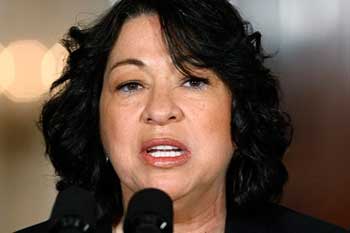
However, Sotomayor said that as lower courts are divided on the issue in similar cases, it was not indisputably clear to the court that the companies deserved a temporary injunction. Sotomayor observed, “Even without an injunction pending appeal, the applicants may continue their challenge to the regulations in the lower courts.” Without delving into the merits of the religious-belief based claims of the companies, Sotomayor held that following a final judgment from the lower courts, it was open to the companies to approach the Supreme Court for consideration of their appeals.
Hobby Lobby and Mardel have claimed that the contraceptive mandate conflicts with the Religious Freedom Restoration Act, 1993, as well as violating their rights guaranteed under the First Amendment to the U.S. Constitution.
However, in November, Oklahoma federal judge Joe Heaton refused the companies a request for preliminary injunction against the contraceptive mandate holding that the religious rights of the Green family members did not extend to the for-profit chain stores. This was followed by a refusal by the 10th U.S. Circuit Court of Appeals in Denver to grant preliminary injunction.
The case is Hobby Lobby Stores Inc et al v. Sebelius et al, U.S. Supreme Court, No. 12A644.

