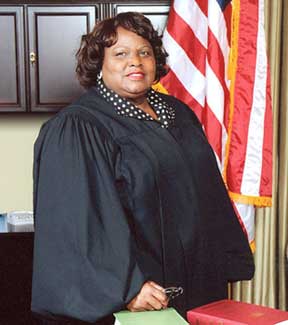
According to the state constitution, the top post in the High Court should ordinarily go to the longest serving associate Justice. Johnson began her service on the state Supreme Court in 1994, while the next contender in line, Justice Jeffrey Victory joined in 1995. The dispute, however, is over the manner by which Johnson was inducted into the Supreme Court. Though, her appointment to the Fourth Circuit Court of Appeals was through election, her assignment to serve on the Supreme Court as its first black Justice was according to a racial discrimination settlement made between the U.S. government and Louisiana.
The seat on the Supreme Court to which Johnson was first appointed in 1994 was a temporary seat created to accommodate the terms of the settlement between the federal and state governments. Opponents to Johnson's appointment as Chief Justice of the Louisiana Supreme Court contend that she should not get credit for the term of the first six years of her service, which was not through election, but by appointment under the terms of a settlement decree.
Current Chief Justice Katherine Kimball had raised a note in the matter asking concerned persons and authorities to file their views on the matter with the court by August 31. However, Johnson, suspecting bias, chose to bring the matter before the court of federal judge Susie Morgan.
The drama in the situation heightened with the Obama administration throwing its weight behind Johnson along with the civil rights organization NAACP and the city of New Orleans. The political and racial play over Johnson's appointment took a new turn again when Louisiana Governor Bobby Jindal, who is neither white nor black, but of Indian origin, announced that the Louisiana Supreme Court should decide the issue and the federal government, should stay out of the matter.
On Thursday, federal Judge Morgan ended the hearing without declaring when or how she is going to decide on the matter. Johnson's supporters say that leaving the decision to the high court which has a six white, one black, composition, would likely end in bias and result in Johnson being passed over for the post of chief justice.
James Williams, one of Johnson's lawyers said, “In the 200-year history of the Louisiana Supreme Court, every chief justice has ascended to that position automatically.” But, this one is not going to be automatic.

