The magazine mentioned three wines from the island: Larose from Stonyridge Vineyard, which has "sweet blackberry, cassis and plum notes"; Reserve Merlot Cabernets from Mudbrick Vineyard; and The Point, a wine from Te Whau Vineyard, which columnist Audrey Luk compared to a classic Bordeaux.
Grape plantings on Waiheke include Pinot Gris, Viognier, Syrah, Chardonnay, Cabernet Sauvignon, Merlot, Cabernet Franc, Malbec and Petit Verdot. One aspect of growing fruit on an island that is covered in native forest is that it has to be netted because of all the birds. Most of Waiheke's wineries also use sustainability practices.
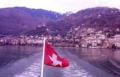
A visit to this 23,000-acre getaway takes 35 minutes by ferry or catamaran from the historical Auckland Ferry Building, passing through waters inhabited by orcas and dolphins. About a quarter of Waiheke's resident population of 8,000 takes the ferry to work in the city.
Kiwis have always enjoyed day trips to Waiheke, and foreign visitors are arriving in increasing numbers. The climate is warmer and sunnier than the rest of Auckland, with less humidity and rain. In the summer, up to 50,000 tourists come to drop anchor, soak up the rays, picnic with their kids, meander among the arty villages or go wine-tasting. Some get married or honeymoon at the quiet resorts. Others come for the annual jazz festival, yearly horse races along a beach or the great hiking and bird-watching.
Travelers who stay for dinner can see Auckland's skyline etched against peach-colored clouds. Taking in the view from Mudbrick Vineyard's restaurant, while eating plump, juicy mussels in a wine-and-cream sauce and drinking feijoa (pineapple-guava) vodka was a big treat for this Americanized Kiwi returning for a visit.
Mudbrick is one of the many internationally extolled Waiheke restaurants. The story of how its owners, then accountants in their 20s, built their establishment, vine by vine, on weekends for years, while cattle ate the plants during the week, is heartwarming and a reminder to all of us that we can have our dreams.
I also stopped into Te Whau Vineyard, voted "One of The World's Finest Winery Restaurants" (Wine International Magazine, London, August 2004). Visitors drive past one of three alpaca farms on the island to reach the winery, which spans a bluff with a panoramic view of the gulf and city.
Te Whau (pronounced roughly "Te Foe") is an organic winery; owners rely on natural yeasts and don't add pectin or acids. Each vintage is foot-stomped in a celebration by friends and family before going through a basket press and then into oak barrels.
Waiheke is home to several olive groves that have a total of about 40,000 trees.
Lewenz creates three-piece, abstract art in bold colors. Landscapes and the ocean are repeated themes in her work, which is presented on canvas, glass and wood.
"I'm always exploring different materials and pushing the envelope as far as I can," she said, recalling how she has dipped wings and feathers and used them to apply paint.
Travelers who stay overnight on Waiheke have a wealth of accommodation choices, from camping and backpacker hostels to chalets and resorts.
One of New Zealand's top locations is Te Whau Lodge on the island. Sprawling on a hilltop with island and city views, the lodge offers stays for just four couples at a time. Dinner-party-style meals include duck, venison and seafood, and are complemented with vegetables and herbs from Te Whau's garden and paired with the island's wine. Dinners are served on the deck in summer.
Visitors interested in pre-European Maori history can find the remains of communities along the narrow headlands. The Maori name Waiheke means "cascading waters."
IF YOU GO
Information: www.waiheke.co.nz.
Accommodation: From camping to resorts, at prices of approximately $7 to $1,000 a night.
Transportation: Ferries and catamarans depart from Auckland Ferry Building, 99 Quay St.
Julie Pendray is a freelance travel writer.