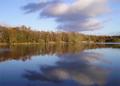
Self-guided Coastal Birding Trails wind through the area since this is a major flyway for migrating birds. Historic Fort Morgan on Mobile Bay was completed in 1834. Today, it is a key spot for April and October banding. A hummer/bird study group led by Bob and Martha Sargent weighs and measures captured hummingbirds and other neo-tropical songbirds, then bands them before release. Early morning is the ideal time to capture the action with cameras. (There is an admission charge to Fort Morgan, but the banding site is free.)
Jesse's Restaurant and Moore's Village Market form the heart of this "better than Mayberry" community. It's just one area restaurant serving royal red shrimp. With extraordinarily long and pointed rostrums the crustaceans resemble medieval jousters poised to attack. One of four kinds of wild shrimp caught in the Gulf of Mexico, royal red shrimp are available year round, but the peak season is late summer and early fall. Because it takes bigger boats with longer lines and the capability and fuel to stay out longer, only two boats from the Bon Secour Bay area trawl for royal reds.
Weeks Bay National Estuarine Research Reserve flanks both sides of Hwy 98 a few miles west of Magnolia Springs. The Visitors Center has displays that explain the importance of an estuary, where fresh and salt water come together. Tidal action aids these wetlands to filter out pollutants and supply nutrients for spawning fish, crab, shrimp and oysters. The Live Oak Trail boardwalk leads to an overlook for marsh bird-watching. Some 300 species of migratory birds seek marsh grasses for their habitat. Reserve ahead for guided tours (251-928-9792).
A second boardwalk trail rises above a pitcher plant bog along County Road 17 east of the Fish River. The boardwalk protects the fragile bog plants - sphagnum mosses, thread-leaf sundew, native orchids, and several species of carnivorous pitcher plants - from destructive footsteps.
Loggerhead females, which can weigh between 200 and 350 pounds often nest several times during the season. Each nest can contain 100-126 pingpong-ball-looking eggs, which hatch by moonlight and starlight. When they hatch, 53 to 55 days after the female lays the eggs, the 2-inch hatchlings immediately waddle toward the sea. Share the Beach volunteers mark and protect the nests from humans and predators such as raccoons, dogs, seabirds and crabs. If they survive their first two years, sea turtles can live up to 50 years. They spend most of their lives riding rafts of sargassum in the open ocean.
Porpoise watching is a bit like a game of hide and seek. Several companies cruise Bayou St. John and Bay La Launch simply to look for wild porpoises. It is illegal to feed or touch wild marine mammals, but boat captains know porpoises love to hang out around fishing boats, so they will steer toward boats with telltale signs of circling gulls. A small geyser of water as the porpoise takes a breath of air, signals their location. Males often buddy up with males or travel in larger groups called pods. They don't like to swim alone. When a porpoise breaches near a cruise boat, the captain slows to idle, not only in hope of seeing the porpoises surface again nearby, but also to prevent injuries from the propeller.
Sailaway Charters cruises the back bay while shrimping, crabbing, oyster tonging, and bird-watching. Onboard the Miss Janet pontoon boat, each passenger receives a slip of paper to check off the wildlife spied during the cruise. The Nature Tour sheet lists 16 birds, three mammals (including porpoises), two types of crab, four types of shrimp (none of which are royal reds), and 19 species of fish found in the bay.
Reaching shallow water, Janet Beebee tongs for oysters using a device that resembles a posthole digger. "Oyster eggs are fertilized in open water," she explained. "They feed by opening a door (of their bivalve shells) just enough to filter water through. Once they mature they turn into females. Out of millions spawned, only 12 reach adult size, mainly due to fish feeding on them." Shells must measure 3 inches point-to-point before the oysters can be harvested. They develop 1 inch per year, and are called spats before they attach to an underwater surface for life.
Less predictable, but even more intriguing is jubilee, a phenomenon that only occurs around Fairhope and Daphne on Moblie Bay a few times of the year, generally during the summer. There's never advance warning, and longtime residents and vacationers report it always occurs in the middle of the night.
Someone will yell, "Jubilee!" which sends everyone scrambling out of bed, grabbing buckets, bags, boots, scoops, sacks, lanterns and pails to collect a bounty of sea creatures. So many fish and crustaceans flounder in the shallows that the water appears to boil. Jubilee only lasts a few hours, generally ending by dawn, but a single Jubilee can result in a year's worth of seafood to freeze.
No one knows why it happens, but some believe it occurs when fresh water flowing into salt water unbalances the oxygen in the water. Sometimes only crabs jubilee. Other times flounder, catfish, eels, shrimp, crab and other fish rush toward shore. According to www.wikipedia.org, folklore suggests several factors must be in place for the event to occur. The tide will be rising. The sky will be cloudy or overcast the previous day, and a gentle wind will be blowing from the east. Regardless of its origins, jubilee becomes an impromptu beach party hosted by Alabama's coastal creatures, naturally.
IF YOU GO:
Climate: Mild winters average 50 degrees F in winter. Shore breezes temper the 90-degree summer averages.
For information on lodging, activities, restaurants, and attractions contact The Alabama Gulf Coast Convention & Visitors Bureau 800-745-7263 info@gulfshores.com or www.gulfshores.com. An extensive list of condos and individual rental properties can be found through Kaiser Realty
800-225-4853 rentals@kaiserrealty.com or www.kaiserrealty.com.
The Beach House is a B&B by the sea at 9218 Dacus Lane, Gulf Shores, AL 36542. 800-659-6004.
The Magnolia Springs B&B is the only lodging in Magnolia Springs.
251-956-7321 info@magnoliasprings.com or www.magnoliasprings.com.
Carolyn Thornton is a freelance travel writer.
© Copley News Service