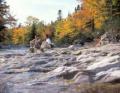
In December, the springtime river flow throughout the arid Cuyo ("desert land") is ferocious. As highland snows melt into the river, it fills lower-elevation canals and irrigates olive groves, fruit trees and, of course, the essential grapevines behind the region's signature product - wine.
Our spectacular finale astride the Argentina-Chile border was confirmation that we'd followed our best travel instincts, pumped by some pre-trip research. What got us into our LAN Airline seats out of Miami wasn't only the promise of cheap good wine, tantalizing tango on TV, or the chatter about Buenos Aires being one of the globe's most exciting cities, a sort of bargain European capital. We also were looking for a new winter escape, and the thought of spring in December and January propelled us into reality.
BUENOS AIRES
The seduction of the capital day or night can be powerful, and that's probably why many tango tourists don't venture very far out of the city. B.A. is certainly the best stop to encounter several national icons besides the tango - namely, gauchos, Evita, beef and the national drink, mate (mah-tee).
It was obvious the country's economic recession of a few years ago didn't decimate the internationally known social scene. B.A. is awake 24 hours, though safety concerns certainly affect free movement in some neighborhoods after midnight. Even in the middle of the week and the night, street rhythms encourage late nighting.
Early on, we wondered how Argentine working people manage their lifestyles. Dinner before 10 o'clock at night is almost unheard of, and then one needs time to digest and sleep before a 9 a.m. office call. We of 6 p.m. dining habits had trouble adjusting. So we began to nibble with fervor at tea - or cocktail hour - instead of waiting for a large slab of beef at 11.
"You Americans always want to eat at tea time," he said. "If I go to New York and there are no restaurants open at 11 on Tuesday, then what am I supposed to do?"
"Adjust," was our silent answer.
Our two nights in Sofitel Buenos Aires put us into the heart of the city and a historic neoclassical building with a hip blend of contemporary design and elegant art deco, a feel that certainly put us in the mood for an evening of tango. What we wanted was the most authentic club we could find.
"Go to Almacen," said the concierge. "It's the most historical tango corner in Buenos Aires," he purred.
So we did. El Viejo Almacen is a classic tango venue, occupying a late 18th century building that surely holds the darkest secrets of the porteno slums, one of the immigrant 'hoods that birthed the dance in the brothels of the day. But tango, we learned, is everywhere in B.A. In the colorful La Boca port district, with its brightly painted doors, windows and balconies, we watched tango dancers perform in a piazza.
On the second day we experienced other icons: gauchos, beef and mate. In the interest of our limited time travel, we booked a day trip out to Estancia Santa Susana. Though very touristy and full of rollicking cruise ship passengers, we enjoyed gaucho riding and roping, a chicken and beef barbecue, and a tango floor show.
BARILOCHE
On arrival day, we opted for a cable car ride to the summit of one peak outside Bariloche, where we enjoyed cafe refreshments and sweeping views of lakes and snow-capped mountains worthy of any travel poster. Up top, I thought of North America's Pacific Northwest area, the Alps and a few other high places on the planet.
We spent our one full Bariloche day on a bus and boat tour circuit to Puerto Blest and Frias Lake, where our catamaran took us close to waterfalls and thick vegetation. Intermittent rain assured us we were in a rain forest.
The town of Bariloche is long on restaurants, boutiques and clubs, but we were more interested in seeing Nahuel Huapi National Park and the Llao Llao Hotel and Resort that sits in the middle of it. Built in 1940 amid the uplifting natural surroundings 22 miles from Bariloche, the resort has modern renovations and amenities, including a golf course and spa. The interior has a sophisticated woodsy lodge feel, an ambience that made us wish we had splurged a bit on hotel accommodations instead of reserving the very-below-par Hotel Panamericano in town.
MENDOZA
A contrasting arid climate greeted us on our arrival in Mendoza. Founded in 1561 by Spaniards, it's a commercial and tourism center between Santiago and B.A. We took a room in the elegant Park Hyatt Mendoza with its restored 19th century Spanish colonial facade and proximity to the main square, shops and parks.
Highlights of our Mendoza city tour were wine tastings and a traditional lunch at the Family Zuccardi vineyards just outside the city. We marveled at Mendoza's lush vineyards and city parks that require dedicated cultivation in that desert climate, and its Andean backdrop that beckoned us the next day to climb to what felt literally like the top of the world.
IF YOU GO
LAN operates domestic flights between Argentine cities and from several U.S. cities into South America. Call 866-435-9526 or visit www.lan.com.
Brendan Worldwide Vacations (800-421-8446 or www.brendanvacations.com) and Ladatco Tours (800-327-6162 or www.ladatco.com) offer escorted and independent tours of Argentina.
Ruth A. Hill is a freelance travel writer.
© Copley News Service