The coupling came about as a happy confluence of events: Silberschlag's personal familiarity with the Piedmont area because of his extensive performances there, biannual tours to Europe already undertaken by St. Mary's Music Department faculty and students under the direction of provost Larry Vote, and a connection with an Italian impresario and renowned flutist named Giuseppe Nova.
Add to this a desire to establish a residency abroad so the students can more deeply interact on an educational, political and cultural basis, and the intent of Alba's city leaders to expand the well-established food and wine image of the Piedmont region to include cultural tourism.
Back to the cathedrals. Depending upon the size of the church, voice and instruments carry differently. Therefore, diverse arrangements are appropriate to particular locales. Alba is full of all kinds of spaces for different kinds of compositions. The intimate San Giovanni lends itself to baroque and chamber pieces; the more grandiose St. Paolo to orchestral themes.
"I've grown up playing the great brass music, and to come to Italy where the music was written, to play it in the cathedral setting for which it was originally designed, is really thrilling," noted orchestra member Michael Adams.
Homage is further paid in the selection of instruments for certain pieces. For an early Monteverdi composition performed at the San Giovanni Church, original instruments such as the harpsichord and gamba - a precursor to the cello - were center stage.
The impact on all participants is extensive, immersed as they are in all aspects of Italian life. The students' perspective takes on an unusual twist in that they experience their professors as fellow performers, practicing and performing on the same stage as they are - and like them, the faculty has their good days and bad.
All regarded as outstanding musicians of their generation in their fields, St. Mary's affiliates - resident musician Brian Ganz on piano, visiting professor Nova on flute, and department head Silberschlag on trumpet - share their vulnerabilities in Alba in a different way than in their classrooms.
The relationship between Alba and St. Mary's has proved so beneficial that in the fall of this year, the college will open an extended campus there. Twenty to 30 students from all scholastic disciplines, plus faculty, will attend the initial semester, which will emphasize Italian language, literature and philosophy. Themes will vary during the year-round programs. Classes will be open to local students as well.
"Being in Italy is essential for a serious musician, primarily because you're immersed in the language, in which so much of the world's beautiful music is written," choir member Scott Humburg observed. "On top of that, you're also surrounded by the architecture, the art. It is a very visceral experience to perform here."
The St. Mary's College River Series, now in its eighth season, has always been a prestigious venue for musicians. And due to relationships honed in Alba, even more world-class artists recently have traveled to the United States to perform there.
The prominence of the River Concert Series, as well as that of the Alba Music Festival, continues to grow. St Mary's is currently in discussions to expand the concept to China.
The program for next year's two-week-long Italian festival includes David Del Tredici's "Opera Dracula," Franz Waxman's score to the 1931 "Bride of Frankenstein," Mozart's "Requiem" and "Piano Concerto No. 21" and Mahler's "Symphony No. 4" interwoven with choral and instrumental programs highlighting chamber music, tango and jazz. And that's just for starters.
The corresponding U.S. summer concert weighs in with Rimsky-Korsakov's "Sheherazade," Prokofiev's "Romeo and Juliet," Strauss waltzes, arias by John Philip Sousa, assorted film music and a couple of world premieres, all, of course, performed by world-class musicians.
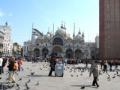
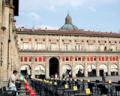
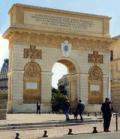
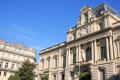
The students' Alba experience extends beyond stage and concert hall, rehearsal and recital. The city is a commercial, cosmopolitan city steeped in history and surrounded by centuries-old architecture. Attractions include its lovely landscape of gently rolling hills blanketed by vineyards planted in perfect rows, and tiny towns that have surrounded imposing stone castles since medieval times and house artifacts from Roman rule.
Adding to the appeal is the fact that Piedmont food and wine should be as well-known as other world-famous cuisines. Visitors often are attracted to Alba as one of only a few villages where Barolo wine may be produced. Many connoisseurs rank it as one of Italy's most prestigious red wines. Two of the more interesting activities associated with Alba is the opportunity to hunt for the treasured white truffle as well as learning the art of wrapping local cheese in selected leaves to preserve their flavor and enhance the ripening process.
IF YOU GO
Look for information to be posted at www.smcm.edu/rcs.
Fyllis Hockman is a freelance travel writer.
© Copley News Service