Once an ancient volcano that released its fury eons ago, creating a glorious protected harbor and a colossal amphitheater, Nuku Hiva is surrounded by rugged, steep-sided volcanic walls covered with thick greenery, deep valleys and sheer rock facings propelling skyward in crazy zigzag designs. It seems as if every species of dazzling tropical plant, flower and tree have sprouted up from the rich volcanic earth urged on by a strange but wonderful energy that permeates the landscape, touching 20 shades of green.
The lakelike bay reflects the nuances of light and shadows that play on the mountains from sunrise until sundown and are reminiscent of a Gauguin painting. Gauguin, who captured the Marquesas on canvas, had a lasting love affair with this part of the world, where his search for an unspoiled island ended at nearby Hiva Oa Island. He painted his final masterpiece there and is buried on a hilltop cemetery amid lush flora.
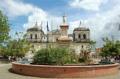
The small Nuku Hiva village has settled in along the harbor, complete with a gas station, bank, sweet-smelling bakery, one or two mom-and-pop markets, a Saturday farmers market, an attractive Catholic Church and school, and a handful of vehicles that at night, under the glorious South Pacific sky, appear to be lost fireflies.
Life is uncomplicated, villagers live off the land, hang their wash out to dry and create handicrafts, jewelry and carvings from shells and wood. The Marquesans vividly remember that only 30 years ago there was no electricity, and 15 years earlier telephone service finally arrived. History also remembers 23-year-old Herman Melville, who in 1842 sailed into these waters with pen in hand a decade before he wrote "Moby Dick." He jumped his whaling ship and landed on the south side of the island, where he was held prisoner for four weeks and was lucky he wasn't a tasty morsel for the island tribe. The island remains much the same as Melville described it in his autobiographical first novel, "Typee."
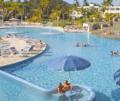
High on a bluff at the far end of the village, the 20-bungalow Pearl Lodge, the only hotel on the island, overlooks the bay with views from every room. It was cleverly designed with a small pool that seems to be hanging in space over a garden of green.
A guided drive inland on a two-lane road takes one back in time, where chickens, roosters, hogs and horses roam the island, the horses finding banana leaves delightful. The wild chickens are the base for a curry dish that would make the late Julia Child proud. Black sand beaches pop up along the way, as do waterfalls, great groves of coconut palms and a small village on the north shore where prizes for the school fundraiser were awarded: a cow for first prize, a goat for second prize and a big bag of rice and two hats for third.
Another big Nuku Hiva event happens every three weeks when the freighter Aranui chugs into the bay, carrying 150 passengers and island goods. The island's artists, some barefoot, quickly gather in an outdoor pavilion near the dock, offering their handicrafts. The Aranui chugs away to another island, and a sense of calmness that is grounded deep in the volcanic earth returns to Nuku Hiva.
Island-hoppers then fly over to Manihi, an atoll amid the Tuamotu Archipelago, and land on a small airstrip in front of a lean-to and sleeping dogs. Guests are ushered via a golf cart down a sandy, palm-lined lane to the Pearl Resort.
Flat as a French franc, the atoll stretches around the resort like a long, slender necklace and is the essence of romance and South Pacific charm. The large turquoise bay swarming with sea life is where Pearl's over-water, beach-view bungalows appear like a daddy longleggs with wet feet. The bungalows, with a window to the world, is where guests carry back a basket of day-old rolls from the dining room and feed the demanding fish who patiently wait below for a lucky catch.
Tikehau, a short flight from Manihi, a magnificent pink sand atoll, is the last stop in French Polynesia, with over-water bungalows and a lagoon that Jacques Cousteau once identified as the richest lagoon in the South Pacific. Sunset cruises, snorkeling, kayaking and excursions to neighboring villages are enjoyed. At dusk, when the stars hang low in the French Polynesian sky with long, lingering shades of pastels, memories are forever.
IF YOU GO
Contact Pearl Resorts at 800-657-3275 or www.pearlresorts.com for information on French Polynesia, the Marquesas and Tahiti. French and Tahitian are the official languages, but English is spoken in virtually all visitor locations. Tipping is not customary and not expected.
© Copley News Service